
MQTT
IoT StandardOverheadVery low
PatternPub/Sub
QoS levels0, 1, 2
Best forMost IoT devices
Choose MQTT for most IoT projects — lightweight, reliable, works on low-bandwidth connections.


C/C++ firmware for microcontrollers — Arduino, ESP32, STM32, Raspberry Pi. RTOS integration, power optimization, OTA update capability.
AWS IoT Core, Azure IoT Hub, or Google Cloud IoT. Device provisioning, data ingestion pipelines, time-series storage, and real-time analytics.
MQTT, CoAP, AMQP, HTTP for data transport. WiFi, Bluetooth, Zigbee, Z-Wave, LoRaWAN, NB-IoT, LTE-M for device communication.
Process data at the device level — AWS Greengrass, Azure IoT Edge. Reduce latency, bandwidth costs, and cloud dependency for time-critical operations.
Fleet management for thousands of connected devices — OTA updates, remote configuration, health monitoring, and alert management at scale.
Real-time monitoring dashboards, KPI tracking, predictive maintenance alerts, and historical data visualization for operators and managers.
MQTT, AWS IoT Core, Raspberry Pi, Zigbee, LoRaWAN, InfluxDB — the IoT entity names Google looks for on technical authority pages. Our team ships production IoT systems on every major platform and protocol.
Cloud IoT platform — industry standard
Enterprise IoT — Microsoft stack
Prototyping + production hardware
Mosquitto / AWS IoT / HiveMQ
Low-power wide-area networks
Time-series IoT data storage
“MQTT vs CoAP vs HTTP IoT”, “WiFi vs Zigbee vs LoRaWAN” — developers and engineers search these queries before starting a project. The page that clearly answers them establishes technical authority.
Choose MQTT for most IoT projects — lightweight, reliable, works on low-bandwidth connections.
Choose CoAP for ultra-constrained microcontrollers with very limited memory and power.
Avoid HTTP for device-to-cloud. Use only for REST API integrations with backend systems.
“IoT system architecture” and “IoT layers explained” — buyers and engineers research these before starting a project. Here is how we architect every layer from sensors to dashboards.
Physical sensors, actuators, and microcontrollers that collect data from the real world. Temperature, pressure, vibration, GPS, cameras, RFID — every IoT system starts here. We select and integrate the right hardware for your environment.
How data moves from device to cloud. Protocol selection (MQTT, CoAP, AMQP) and wireless standard (WiFi, BLE, Zigbee, LoRaWAN, NB-IoT) depends on range, power budget, and data frequency requirements.
Data processed either at the edge (AWS Greengrass, Azure IoT Edge) for latency-critical decisions, or in the cloud for storage, analytics, and ML inference. Time-series databases (InfluxDB, TimescaleDB) store sensor data efficiently.
Real-time dashboards (Grafana, custom React), mobile apps, alerts, and ERP/CRM integrations. This is what your operators, managers, and executives interact with every day. We design for the people who will actually use it.
“IIoT vs IoT difference” — buyers often confuse these. Here is a clear side-by-side breakdown so you can qualify your project and choose the right approach.
Primary users
Industrial IoT (IIoT)
Factory operators, engineers, managers
Consumer IoT
End consumers, homeowners
Environment
Industrial IoT (IIoT)
Harsh — dust, heat, vibration
Consumer IoT
Controlled — home, office
Reliability required
Industrial IoT (IIoT)
Mission-critical — 99.99% uptime
Consumer IoT
Best-effort acceptable
Security level
Industrial IoT (IIoT)
Enterprise-grade — OT/IT convergence
Consumer IoT
Basic consumer security
Data volume
Industrial IoT (IIoT)
Very high — thousands of sensors
Consumer IoT
Low to medium
Protocols
Industrial IoT (IIoT)
MQTT, OPC-UA, Modbus, PROFINET
Consumer IoT
WiFi, BLE, Zigbee, Z-Wave
Integration
Industrial IoT (IIoT)
ERP, SCADA, MES systems
Consumer IoT
Mobile apps, voice assistants
Cost range
Industrial IoT (IIoT)
$40K–$500K+
Consumer IoT
$5K–$80K
CursorNest builds
Industrial IoT (IIoT)
Yes ✓ — manufacturing, energy, logistics
Consumer IoT
Yes ✓ — smart home, healthcare, retail
| Factor | Industrial IoT (IIoT) | Consumer IoT |
|---|---|---|
| Primary users | Factory operators, engineers, managers | End consumers, homeowners |
| Environment | Harsh — dust, heat, vibration | Controlled — home, office |
| Reliability required | Mission-critical — 99.99% uptime | Best-effort acceptable |
| Security level | Enterprise-grade — OT/IT convergence | Basic consumer security |
| Data volume | Very high — thousands of sensors | Low to medium |
| Protocols | MQTT, OPC-UA, Modbus, PROFINET | WiFi, BLE, Zigbee, Z-Wave |
| Integration | ERP, SCADA, MES systems | Mobile apps, voice assistants |
| Cost range | $40K–$500K+ | $5K–$80K |
| CursorNest builds | Yes ✓ — manufacturing, energy, logistics | Yes ✓ — smart home, healthcare, retail |
“IoT for manufacturing”, “healthcare IoT solutions”, “smart building IoT” — industry-specific searches convert when you show domain expertise, not generic connected devices.
Predictive maintenance, equipment monitoring, production line optimization, quality control sensors, and OEE dashboards.
Remote patient monitoring, wearable health sensors, hospital asset tracking, medication dispensing, and HIPAA-compliant data pipelines.
Real-time GPS fleet tracking, cold chain temperature monitoring, cargo condition sensing, and warehouse inventory management.
HVAC automation, occupancy sensing, energy monitoring, access control, lighting control, and building management system (BMS) integration.
Soil moisture, weather stations, irrigation control, livestock tracking, and crop health monitoring over wide areas via LoRaWAN.
Smart metering, energy consumption analytics, grid monitoring, renewable energy optimization, and demand response systems.
IoT security is designed in from the start — not patched after launch. Device authentication, encryption, and compliance built into every layer for high-trust connected systems.
X.509 certificates for device identity. Mutual TLS authentication between device and cloud. No shared credentials across device fleet.
TLS 1.3 for data in transit. AES-256 for data at rest. Encrypted storage on device firmware. No plaintext sensor data on network.
Signed firmware updates delivered over-the-air. Rollback capability on failed updates. Update integrity verified before flashing.
IoT devices isolated in separate VLANs. Firewall rules limit device communication to authorized cloud endpoints only.
ML-based anomaly detection on device behavior. Unusual data patterns or connection attempts trigger automated alerts and device isolation.
HIPAA for healthcare IoT. IEC 62443 for industrial systems. GDPR for consumer data. NIST IoT framework alignment built into architecture.

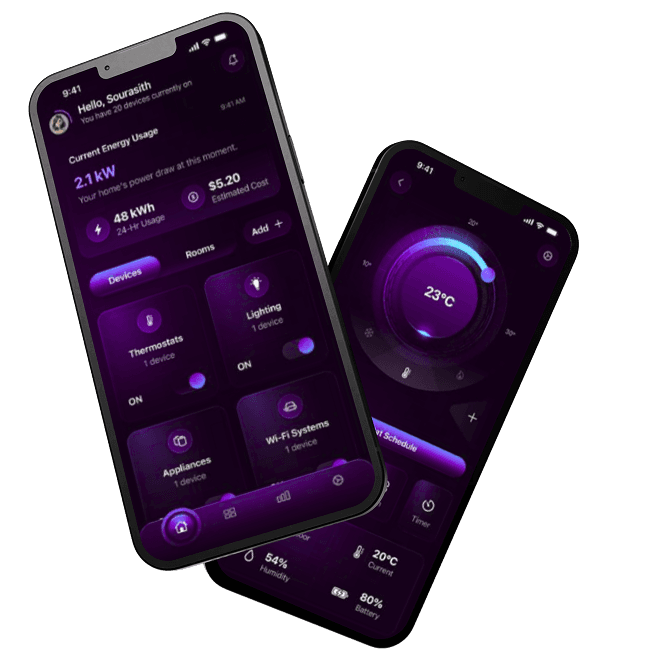
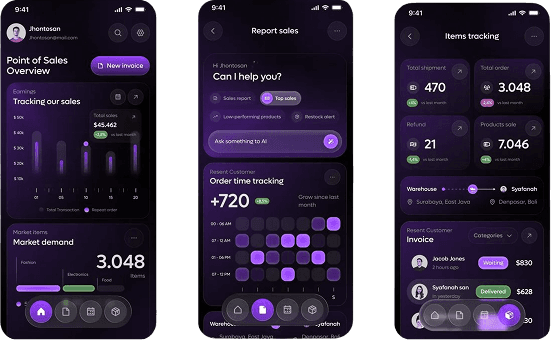
Transparent pricing by project type, scope, and hardware — so you can budget before your first discovery call. “IoT development cost 2026” is one of the highest searched queries in connected device development.
| IoT Project Type | Scope | Hardware | Cost Range | Timeline |
|---|---|---|---|---|
| IoT Proof of Concept | 1 sensor type, basic dashboard | Arduino / Raspberry Pi | $5K–$15K | 3–6 wks |
| Smart Home / Building | 10–50 devices, mobile app | Zigbee / Z-Wave hub | $15K–$40K | 6–12 wks |
| Industrial IoT (IIoT) | 50–500 sensors, real-time monitoring | ESP32 / STM32 | $40K–$120K | 3–6 mo |
| Fleet / Asset Tracking | GPS + sensors, cloud backend | LTE-M / NB-IoT | $25K–$80K | 2–5 mo |
| Remote Patient Monitoring | Medical sensors, HIPAA backend | BLE wearables | $50K–$150K | 4–8 mo |
| Smart Agriculture / City | LoRaWAN network, 100+ nodes | LoRa modules | $60K–$200K | 6–12 mo |
| Edge AI IoT System | On-device ML inference | NVIDIA Jetson | $80K–$250K | 6–12 mo |